HOW WHIZ.LIFE BUILDS COURSES

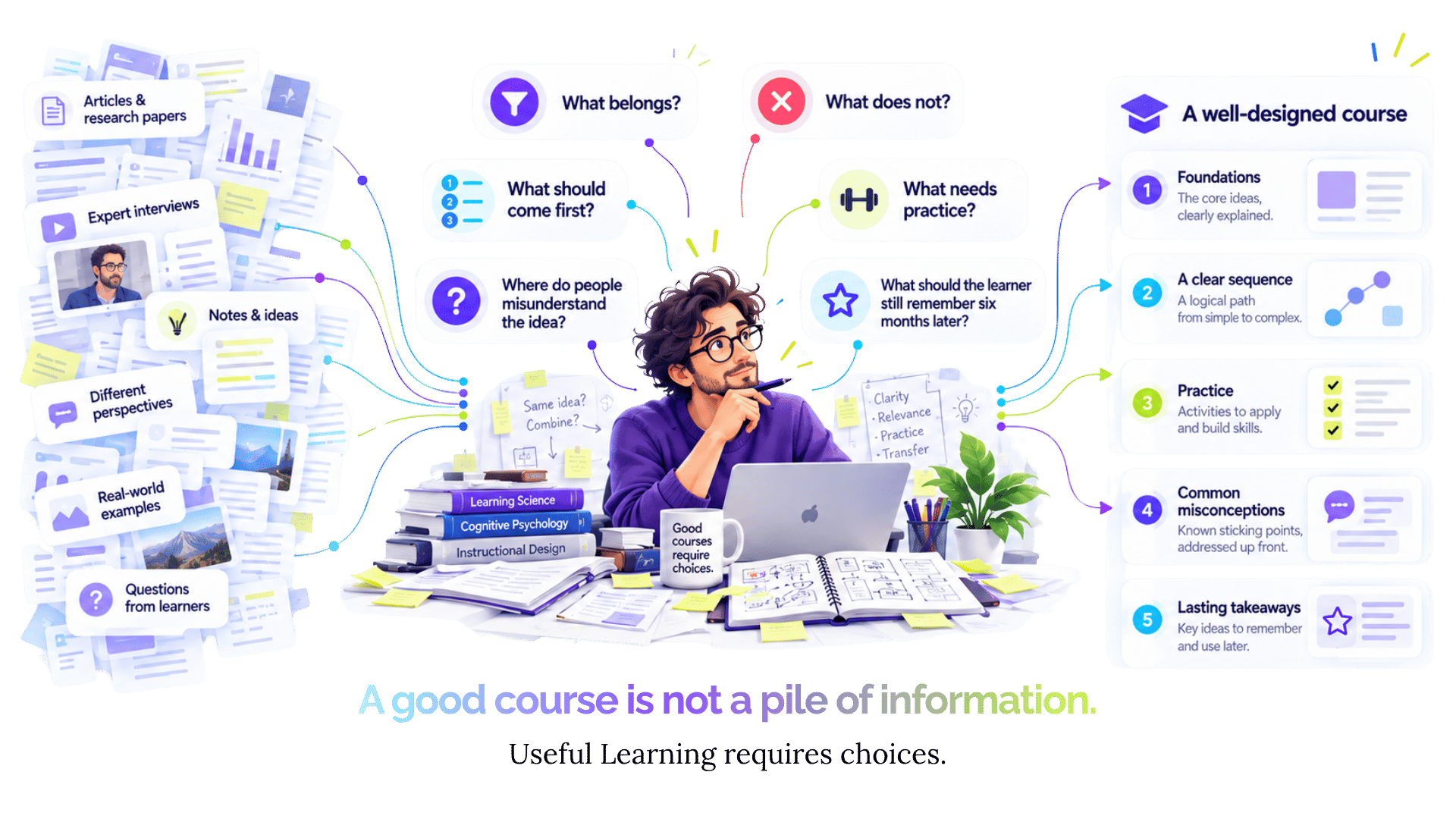
A good course is not a pile of information.

Useful learning requires choices.

  1. What belongs?
  2. What does not?
  3. What should come first?
  4. What needs practice?
  5. Where do people misunderstand the idea?
  6. What should the learner still remember six months later?

Whiz.Life treats those questions as part of the product.
OUR APPROACH

Start with the real learner job.

We begin with what a person is actually trying to understand, prepare for, decide or do better.
  • Not:
    “Here is everything we know about this subject.”
  • Instead:
    What does this learner need to understand and be able to use?

RESEARCH

Research wider than the learner reasonably can.
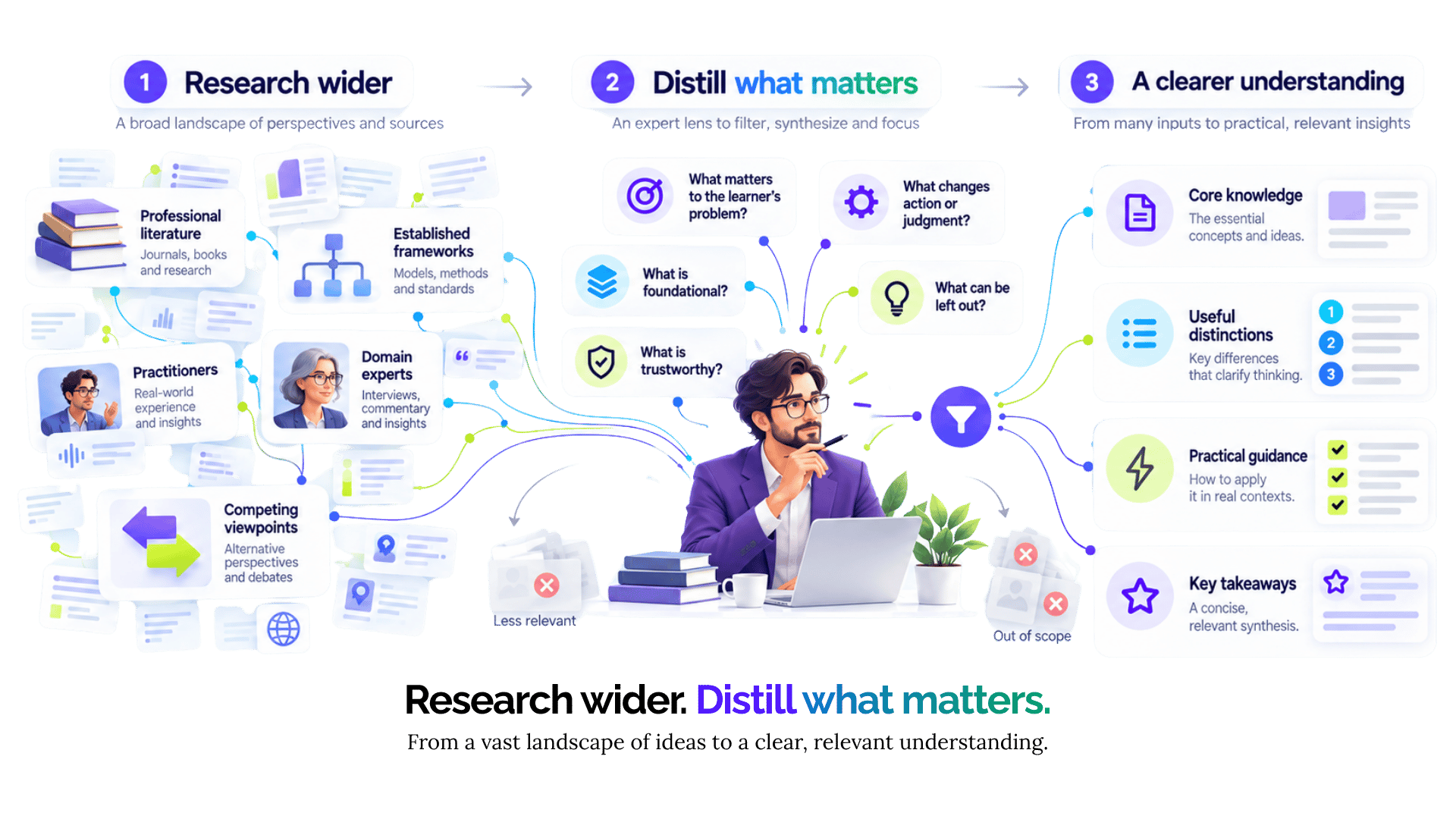
Depending on the subject, we may draw from:
  • books;
  • primary sources;
  • research;
  • professional literature;
  • established frameworks;
  • practitioners;
  • domain experts;;
  • competing viewpoints.
The goal is not to collect the largest bibliography.
It is to find the knowledge that genuinely matters to the learner's problem.
SYNTHESIZE

Make the hard editorial decisions.

Research becomes useful only after someone asks:
  • Which ideas recur?
  • Which ideas conflict?
  • What is evidence and what is opinion?
  • What depends on context?
  • What can be simplified safely?
  • What becomes misleading if simplified?
  • What should the learner remember?
This synthesis is a core part of Whiz.Life.
INSTRUCTIONAL DESIGN

Build for learning—not coverage.

Where appropriate, a Whiz.Life course can include:
  • readiness checks;
  • clear outcomes;
  • visual frameworks;
  • worked cases;
  • focused practice;
  • transfer to new situations;
  • feedback and revision;
  • retrieval;
  • eusable tools;
  • return cues.
A polished explanation is not enough if the learner needs a skill.

PRACTICE AND APPLICATION

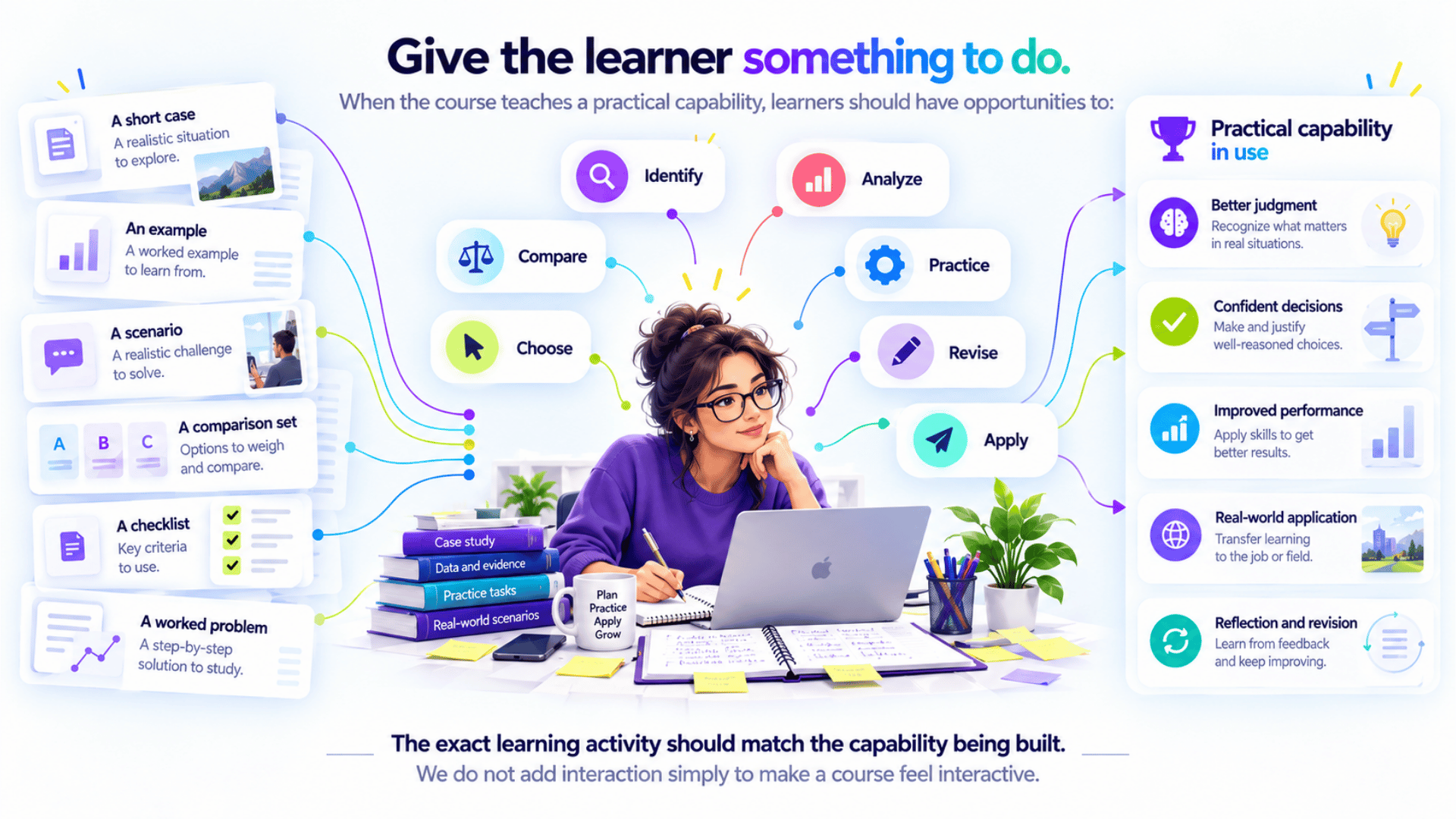
Give the learner something to do.

When the course teaches a practical capability, learners should have opportunities to:
  • identify;
  • compare;
  • choose;
  • analyze;
  • practice;
  • revise;
  • apply.
The exact learning activity should match the learning point.
We do not add interaction simply to make a course feel interactive.

1

BOUNDARIES

Say where the course stops.

Some subjects involve uncertainty, genuine disagreement, personal judgment or licensed professional advice.

A trustworthy course should make those boundaries visible. Whiz.Life should help you know more—not make you falsely certain.

2

IMPROVE

Let real learners improve the course.

Learner questions, assessments, mistakes, completion patterns and real-world application reveal where the course needs to improve.

Whiz.Life courses become better with feedback from learners.
THE WHIZ.LIFE LEARNING STANDARD

Trust should be earned.

We do not ask you to trust Whiz.Life because a course looks polished.

We aim to earn that trust through the way the course is built.

Source-aware

Source-aware
Important claims and frameworks should be traceable to credible sources where that matters.

Synthesized

Synthesized, not copied
A course should connect useful knowledge across sources rather than disguise a book summary as teaching.

Designed for use

Practice, cases, feedback and reusable tools belong in the learning experience when the outcome requires them.

Clear about boundaries

Where evidence is uncertain, viewpoints differ, or professional advice is needed, the course should say so.

Courses

SEQUENTIAL LEARNING PATH

Learning Programs

Created with